Usabilidad y Accesibilidad Web (UAWeb)
La usabilidad y accesibilidad web son dos pilares fundamentales y necesarios en las plataformas digitales que existen en Internet, como es el caso de MEVyT en línea, donde se imparten clases de secundaria en línea y primaria en línea, y que, además, deben tomarse muy en serio a la hora de desarrollar aplicaciones web.
Hoy por hoy, la usabilidad y accesibilidad web van de la mano y su correcta ejecución va a permitir crear herramientas o plataformas digitales o plataformas educativas para un mejor aprendizaje en la educación, así como en otras plataformas digitales del gobierno o de otras instituciones o corporaciones donde se quiere llevar una colaboración entre un grupo de personas.
Incluso el portal para obtener la reposición del certificado de secundaria SEP, también implementa la usabilidad y accesibilidad web.
Por la anterior, es altamente conveniente, darle la importancia que merece tanto la usabilidad, como la accesibilidad web, que veremos a continuación.

¿Qué es la usabilidad web?
La facilidad de uso es una expectativa común para que un sitio se considere bien diseñado.
En los últimos años, nos hemos acostumbrado a ciertos estándares en diseño web.
Para causar una impresión duradera en sus visitantes, debe crear experiencias que vayan más allá de las de un sitio web sencillo y utilizable.
Esto no significa que la usabilidad se haya vuelto menos importante.
Simplemente asume un papel diferente en el diseño web, y ahora forma la base para una excelente experiencia de usuario.
La usabilidad significa diseño centrado en el usuario.
Tanto el proceso de diseño como el de desarrollo se centran en el posible usuario, para asegurarse de que se cumplan sus objetivos, modelos mentales y requisitos. Y para construir productos que sean eficientes y fáciles de usar.
Aquí hay 5 principios clave para una buena usabilidad de un sitio web. Asegúrese de considerarlos en su próximo proyecto.
Te puede interesar:
Disponibilidad y accesibilidad
Si las personas intentan acceder a su sitio web y no funciona, por el motivo que sea, su sitio web se vuelve inútil.
Los usuarios no solo se sentirán frustrados, sino que también perderá nuevos clientes e ingresos cada vez que su sitio no esté disponible.
Estos son algunos de los conceptos básicos de disponibilidad y accesibilidad,
- Tiempo de actividad del servidor: es importante asegurarse de que sus visitantes no obtengan un error al intentar cargar su sitio. Invierte en un buen hosting. Invierte en un buen hosting. Nunca escatimamos esfuerzos aquí, obtenga un buen proveedor de alojamiento web en el que pueda confiar.
- Enlaces rotos: compruebe que no haya enlaces muertos en su sitio. Las herramientas de SEO como Ahrefs y Screaming Frog rastrearán su sitio por usted y encontrarán todos los enlaces rotos.
- Capacidad de respuesta móvil: asegúrese de que su sitio pueda manejar diferentes tamaños de pantalla y conexiones lentas. Google también se ha movido a un índice de "dispositivos móviles primero", lo que significa que indexan las versiones móviles de los sitios. Por lo tanto, un excelente sitio para dispositivos móviles lo ayudará a obtener mejores resultados de búsqueda.
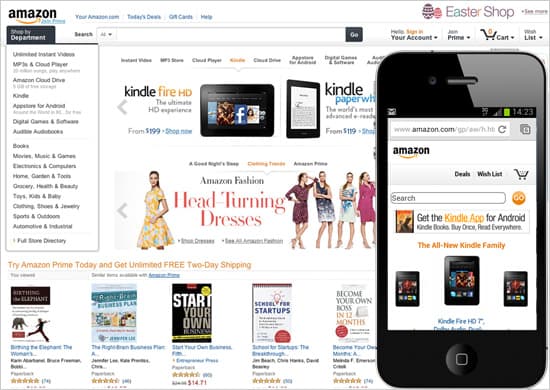
Amazon.com es un ejemplo perfecto de un sitio web accesible por varias razones.
Primero, la versión de escritorio del sitio está optimizada para tabletas y pantallas de escritorio. El diseño es flexible y se ajusta automáticamente a medida que se reduce el tamaño de la pantalla. Para dispositivos móviles, existe una versión explícita del sitio con una interfaz limpia, menos desorden y una jerarquía clara del contenido. Esta versión móvil simplificada funciona a la perfección, incluso con una conexión lenta a Internet móvil.
En segundo lugar, Amazon.com casi no tiene tiempo de inactividad. Obviamente, esto es lo que espera de una empresa de ese tamaño. Aun así, el historial de disponibilidad constante hace de Amazon una plataforma de servicio confiable y digna de confianza.
Por último, pero no menos importante, Amazon se preocupa activamente por su accesibilidad. En su sitio web, afirman: "Siempre estamos buscando formas de mejorar la usabilidad del sitio para nuestros clientes, incluidos aquellos con discapacidades". Para los lectores de pantalla, recomiendan específicamente su sitio móvil con una presentación más limpia del contenido.
Claridad
Se podría decir que el núcleo de la usabilidad es la claridad.
Si distrae o confunde a sus visitantes, necesitarán más tiempo para encontrar lo que vinieron a buscar o podrían olvidar su objetivo inicial por completo. De cualquier manera, no verán su sitio web como fácil de usar y es probable que se vayan insatisfechos y sin intención de volver.
Los visitantes llegan a su sitio con ciertos objetivos en mente. Es su trabajo ayudarlos a alcanzar estos objetivos lo más rápido posible. Si puede hacerlo, sus visitantes estarán encantados y usted habrá sentado las bases para una experiencia positiva.
Se puede lograr un diseño claro y utilizable mediante:
- Sencillez: céntrese en lo importante. Si no distrae a sus visitantes, será más probable que hagan lo que usted quiere que hagan.
- Familiaridad: Cíñete a lo que la gente ya sabe. No hay nada de malo en buscar inspiración en otros sitios.
- Consistencia: no te pongas lindo. Cree una experiencia coherente en todo su sitio web para que sus visitantes se sientan tranquilos.
- Orientación: lleve a sus visitantes de la mano. No espere que sus visitantes exploren su sitio por su cuenta. En su lugar, guíelos a través de su sitio y muéstreles lo que tiene para ofrecer.
- Retroalimentación directa: la retroalimentación es esencial para cualquier interacción. En el momento en que las personas interactúan con su sitio, asegúrese de ofrecer una indicación del éxito o el fracaso de sus acciones.
- Buena arquitectura de la información: comprenda los modelos mentales de sus visitantes y cómo esperarían que estructurara el contenido de su sitio.
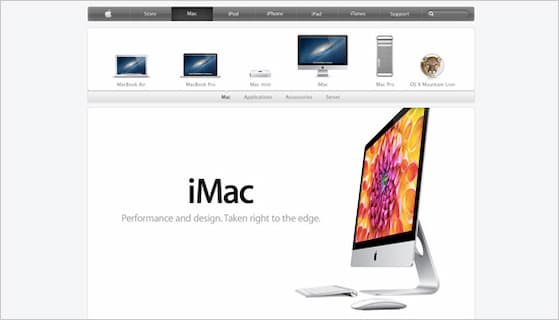
Una presentación de contenido clara y visual hace que Apple.com sea muy intuitivo de usar.
Apple es conocida por sus productos esbeltos y fáciles de usar.
La extrema simplicidad de la marca y el enfoque en lo que realmente importa también se puede encontrar en su sitio web.
El aspecto general es muy elegante y minimalista. Hay mucho espacio en blanco y solo el contenido relevante se presenta de forma limpia y sencilla. El menú de navegación superior clásico contiene el logotipo y el botón de inicio, la tienda, diferentes categorías de productos, un enlace a la página de soporte y una función de búsqueda. El pie de página del sitio contiene enlaces secundarios clásicos, como los Términos de uso y la Política de privacidad.
No hay distracciones, lo que hace que sea muy fácil perseguir sus objetivos en el sitio.
Por ejemplo, al elegir la categoría "Mac" en la navegación superior, obtendrá una descripción general visual de los diferentes productos Mac disponibles. Además, obtiene una subnavegación que enumera todos los productos relacionados relevantes para esta categoría. El diseño claro hace que el sitio web sea tan intuitivo de usar como todos los demás productos de Apple.
Capacidad de aprendizaje
La capacidad de aprendizaje es otro aspecto importante de la usabilidad.
Su objetivo debe ser diseñar interfaces intuitivas, interfaces que no requieran instrucciones, o incluso un largo proceso de prueba y error para descubrirlas. La clave del diseño intuitivo es hacer uso de lo que la gente ya sabe o crear algo nuevo que sea fácil de aprender.
A estas alturas, la gente está familiarizada con muchos conceptos de diseño que se utilizan en la web. Al utilizar estos conceptos de manera constante, cumple con las expectativas de sus visitantes. De esta manera, los ayudas a alcanzar sus objetivos más rápidamente. Como seres humanos, nos gustan los patrones y el reconocimiento, por lo que manejamos mejores situaciones familiares que desconocidas.
Si usa nuevos conceptos en su diseño, asegúrese de usarlos de manera consistente y ayude a las personas durante la fase de aprendizaje inicial. Por ejemplo, puede ofrecer información adicional o instrucciones la primera vez que utilizan su sitio o producto. Manténgalo simple y visual para ayudar a las personas a recordar nuevos conceptos.
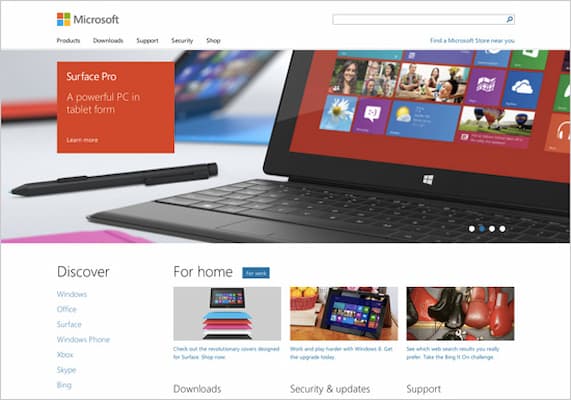
Si bien el diseño del nuevo sitio de Microsoft es moderno y fresco, el diseño es clásico y está en línea con lo que conocemos.
Microsoft rediseñó su sitio web el año pasado.
Si bien el diseño es muy fresco y moderno, el diseño del sitio es clásico y está en línea con lo que la mayoría de nosotros sabemos sobre sitios web. En la parte superior izquierda, está el logo que nos dice dónde estamos. En la parte superior derecha, hay un campo de búsqueda que nos permite buscar en el sitio cualquier término aleatorio. A continuación, se encuentra el menú de navegación superior con las categorías de contenido central del sitio. Al hacer clic en los enlaces, obtenemos un menú desplegable con todo el contenido disponible dentro de esa categoría.
Luego, hay un gran elemento de encabezado visual que alterna entre cuatro imágenes diferentes. El encabezado va seguido de lo que conocemos como área de contenido con un submenú de navegación vertical que presenta diferentes temas que se pueden "descubrir" y algunos contenidos resaltados. Debajo de eso, hay una sección de redes sociales y un área de pie de página completa que presenta Otros sitios de Microsoft y muchos más enlaces secundarios.
El sitio es muy limpio y fácil de navegar. El diseño familiar ayuda a las personas a encontrar rápidamente lo que buscan.
Credibilidad
La credibilidad es un aspecto crucial de cualquier sitio web.
Incluso si las personas encuentran el contenido que buscan, si no confían en usted, ese contenido no tiene valor. Su sitio web podría hacer que los visitantes del sitio se muestren escépticos acerca de su negocio de muchas maneras, incluido si realmente existe o no, su reputación o la calidad de su contenido.
Es importante que la gente sepa que eres una empresa real con personas reales. Ofrezca una página clara de "Acerca de nosotros" junto con sus datos de contacto y, si es posible, una dirección física.
Por supuesto, su contenido también juega un papel importante para la confiabilidad percibida de su sitio. Asegúrese de ser honesto y preciso sobre su contenido. Evite errores, como gramática incorrecta o errores ortográficos. No sea modesto acerca de su experiencia. Si es un experto en su campo, asegúrese de que la gente lo sepa. Por ejemplo, puede mostrar testimonios de terceros, referencias laborales o el número de sus seguidores en las redes sociales para ganarse a sus visitantes.
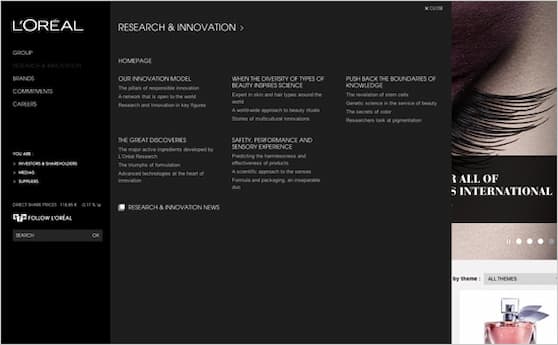
L'ORÉAL ofrece una gran cantidad de contenido de alta calidad para demostrar su experiencia y generar confianza.
La marca L’ORÉAL hace un gran trabajo cuando se trata de generar credibilidad en la web.
Además del diseño profesional, que coincide con la exquisita reputación de la marca, ofrecen una gran cantidad de contenido de alta calidad para demostrar su experiencia.
Por ejemplo, una sección de contenido completa cubre información sobre Investigación e Innovación. Esto muestra el compromiso de la marca con la investigación profesional y refleja la alta calidad de sus productos. Otra sección de contenido aborda los Compromisos, demostrando que la marca se toma en serio sus responsabilidades sociales.
Además de la investigación real, la marca también hace uso de testimonios de expertos y fotografías de celebridades, como Julia Roberts, para convencer a la gente de la calidad y popularidad de sus productos. Otro indicador de confianza es que es muy fácil ponerse en contacto con L’ORÉAL. La marca no solo está disponible a través de las redes sociales, sino que también es fácil encontrar una dirección física y un número de teléfono.
Relevancia
Por último, pero no menos importante, la relevancia contribuye a una buena usabilidad del sitio web.
No es suficiente que tu sitio web sea claro, tu contenido también debe ser relevante. Nuevamente, es esencial que conozca a sus usuarios y por qué visitan su sitio.
Empiece por definir quiénes son sus usuarios. En segundo lugar, hable con ellos para averiguar cuáles son sus objetivos cuando visitan su sitio. En tercer lugar, defina escenarios de usuario que demuestren en qué situación las personas visitan su sitio para encontrar qué tipo de contenido. Cualquier decisión de diseño que tome debería resultar en un sitio web más fácil de usar para sus usuarios.
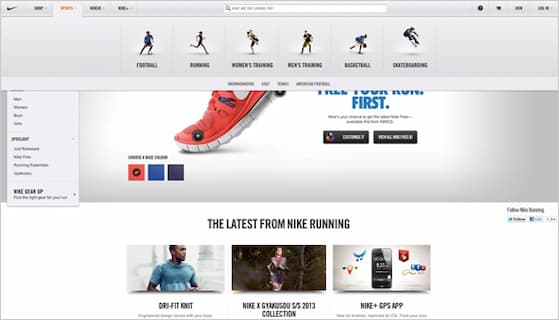
Nike le permite navegar por su tienda de acuerdo con su objetivo muy específico.
Nike ha hecho un trabajo ejemplar al priorizar su contenido con enfoque en sus usuarios.
La marca ofrece ropa y equipamiento deportivo para diferentes deportes. Cuando ingrese a su sitio web, puede elegir navegar por su tienda por Hombres, Mujeres o Niños, o puede navegar por deportes. En lugar de agrupar únicamente a las personas por edad o sexo, Nike reconoce a sus visitantes como deportistas dentro de una determinada disciplina.
Por ejemplo, si está buscando nuevas zapatillas para correr, ni siquiera le importan todas las zapatillas de tenis o deportivas de interior que también tienen. Nike le permite navegar por su tienda de acuerdo con su objetivo muy específico.
La usabilidad significa probar, probar y probar nuevamente
La buena usabilidad no se logra de la noche a la mañana.
Requiere una investigación exhaustiva del usuario y un enfoque iterativo de pruebas y refinamientos constantes.
La buena usabilidad depende de si su sitio web está disponible, es claro, creíble, fácil de aprender y relevante para las personas que realmente lo usan.
¿Qué es la accesibilidad web?
La accesibilidad, también conocida como la capacidad de acceder, significa que los dispositivos, servicios y productos son accesibles para las personas con discapacidades. Algunas personas tienen que usar tecnologías de asistencia que hacen que estas cosas sean accesibles para ellos.
Los usuarios con discapacidades no pueden acceder a ningún producto, dispositivo y servicio si no se tienen en cuenta sus discapacidades. Una cosa es perder nuevas posibilidades, pero estos usuarios pueden sentirse discriminados debido a una discapacidad.
Se podrían ahorrar recursos, como tiempo y dinero, si se tuviera en cuenta de antemano la accesibilidad. Tomar cualquier decisión basada en la accesibilidad garantizaría que los productos, servicios y dispositivos sean accesibles.
Accesibilidad web
La accesibilidad web se centra en diseñar y desarrollar sitios web que sean más accesibles para las personas con discapacidades. Significa que los sitios web que han aplicado los principios de accesibilidad pueden proporcionar contenido más accesible.
La accesibilidad tiene principios que se superponen con la usabilidad. Puede parecer que ambos están logrando el mismo objetivo, pero hay una diferencia entre estos dos aspectos de la tecnología. ¿Cuál es la diferencia entre ellos?
La accesibilidad se centra en la creación de contenido web más accesible para personas con discapacidad. La usabilidad, al mismo tiempo, se centra en la experiencia general del usuario que cubre a todos los usuarios, incluidos los usuarios con discapacidades.
Ejemplos de accesibilidad web
Los sitios web tienen gráficos e imágenes ilustrativos para que el sitio se vea atractivo o entregue cierto mensaje. En HTML, hay un atributo que muestra un texto alternativo si una imagen no se pudo ver por algún motivo.
Este atributo ayuda con las discapacidades, como las discapacidades visuales, que requieren tecnologías de asistencia para consumir contenido web. Algunos programas de texto a voz leen el contenido web si se utilizan estas tecnologías de asistencia.
Algunas personas con daltonismo pueden no diferenciar los textos normales de los enlaces y áreas en los que se puede hacer clic porque estos elementos son similares entre sí. La similitud dificulta la diferenciación para algunos usuarios.
Este problema se puede solucionar de diferentes formas. Subrayar el texto del enlace puede ser una forma porque diferencia los enlaces de los textos normales y hace que sea más fácil reconocer la diferencia. Crear un botón de enlace es otra opción.
Finalmente, solo mencionar que, siempre hay que tomar en cuenta todos los puntos de la usabilidad y accesibilidad web en las plataformas digitales, esto garantizara un mejor aprovechamiento para las personas que utilicen estos sistemas digitales, tal es el caso del MEVyT en línea, el sistema de expedición de certificados de primaria y secundaria, el sistema de actas de nacimiento, de consulta de RFC con homoclave sin contraseña, por mencionar solo algunos.
Esperamos haya sido útil esta pequeña introducción a la accesibilidad y usabilidad web.
Te puede interesar:
Deja una respuesta